We Use CookiesWe use cookies to enhance the security, performance, functionality and for analytical and promotional activities. By continuing to browse this site you are agreeing to our privacy policy

10 Best Marine Radios 2026 in the United States

#1

Winner

10.0 score

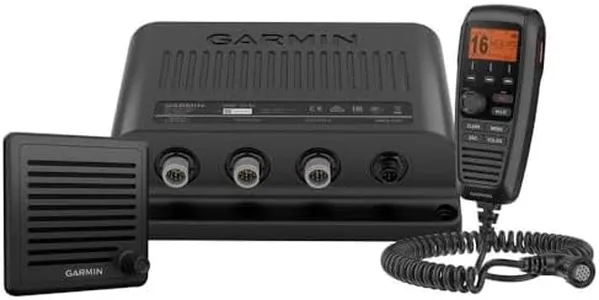
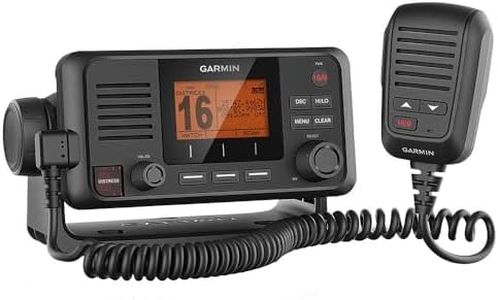
Garmin 0100209800 VHF 215 AIS, Slate Gray with Amp Yellow Band
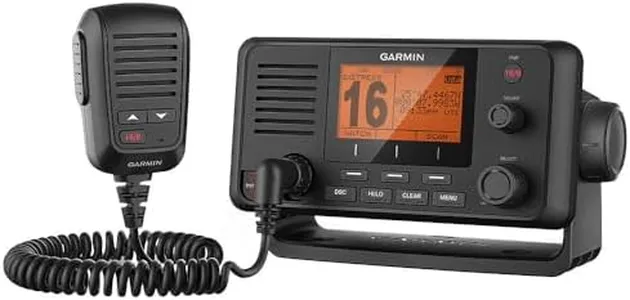
The Garmin 0100209800 VHF 215 AIS is a fixed-mount marine radio that offers several key features beneficial for marine communication. It has a substantial power output with a maximum talking range of up to 36 miles, which is impressive for maintaining clear communication over long distances. The frequency range covers 156.050 MHz to 163.275 MHz, including weather (WX) channels, ensuring you can stay updated on weather conditions.

Rating
10.0
Chosen by1,498
GPS Integration

Most important from
17 reviews

GPS Integration
Awesome radio with internal GPS, providing latitude and longitude position without additional wiring.
#2
10.0 score

Icom M94D 21 USA VHF Marine Transceiver with DSC & AIS Receiver
The Icom M94d VHF Marine Radio is a handheld device, making it portable and convenient for on-the-go marine communication. It boasts a power output of 6W, which provides robust signal strength for reliable communication up to a maximum range of 5 kilometers. The radio operates on various frequency bands, including AIS and DSC, facilitating essential distress signal calling and vessel traffic information, ensuring heightened safety at sea.

Rating
10.0
Type (Fixed or Handheld)

Most important from
139 reviews

Type (Fixed or Handheld)
Icom's handheld VHF is highly regarded for its comprehensive features and reliable performance.
#3
9.4 score

Garmin 0100204701 VHF 315

The Garmin VHF 315 is a fixed marine radio designed primarily for boaters needing reliable communication on the water. It offers a solid 25-watt power output, which is strong enough for clear communication over typical marine distances. It covers the standard VHF frequency range (156.000 MHz to 162.025 MHz) and includes 40 channels, meeting the usual needs of marine radio users. One standout feature is the built-in Class D DSC with internal GPS support, though it requires an external antenna to fully utilize GPS functions, which might be a bit inconvenient for some. The radio comes with a GHS 11 handset and a remote speaker, allowing for flexible installation and up to three handsets, which is handy if you want communication accessible from multiple spots on your boat.

Rating
9.4
Power Output
GPS Integration
Waterproof Rating

Most important from
3 reviews

Power Output
The unit offers reliable communication with solid 25-watt power and essential VHF channels.
GPS Integration
Built-in Class D DSC with internal GPS support enhances safety, though it requires an external antenna for full GPS functionality.
Waterproof Rating
Water resistance protects against splashes but additional protection is advisable in heavy rain or rough sea conditions.

Top 10 Best Marine Radios 2026 in the United States
#1

Winner

10.0  score

Garmin 0100209800 VHF 215 AIS, Slate Gray with Amp Yellow Band

Type (Fixed or Handheld): Fixed
Frequency Bands: 156.050 MHz to 163.275 MHz
Waterproof Rating: Water Resistant
Display and Interface: Anti Glare Screen

Chosen by 1498 this week

Icom M94D 21 USA VHF Marine Transceiver with DSC & AIS Receiver

Type (Fixed or Handheld): Handheld
Power Output: 6W
Frequency Bands: AIS, DSC
Waterproof Rating: Waterproof
Battery Life: 10 hours
Display and Interface: Back-lit, dimmable

Garmin 0100204701 VHF 315

Type (Fixed or Handheld): Fixed
Power Output: 25 watts
Frequency Bands: 156.000 - 162.025 MHz
Waterproof Rating: Water Resistant
GPS Integration: Class D DSC, internal GPS, external antenna
Display and Interface: Simple interface, modular parts, limited display

Garmin Fusion Apollo MS-RA770 Marine Stereo, With Built-in Wi-Fi, A Garmin Brand
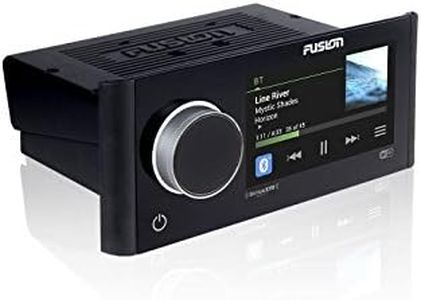
Type (Fixed or Handheld): Fixed
Frequency Bands: 108 MHz
Waterproof Rating: IPX6, IPX7
GPS Integration: No
Display and Interface: 4.3” touchscreen LCD

Garmin 0100209700 VHF 215 Marine Radio
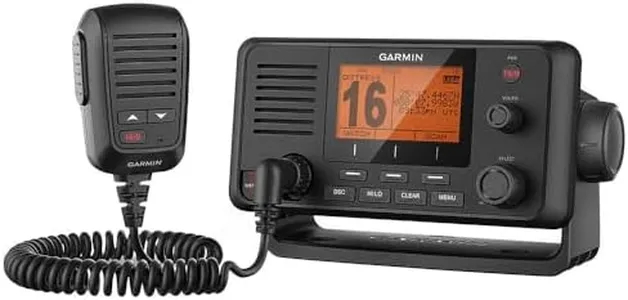
Type (Fixed or Handheld): Fixed
Power Output: 12 Volts (DC)
Frequency Bands: 156.050 MHz to 163.275 MHz
Waterproof Rating: Waterproof

VHF Radio, Ray 91, Modular, with AIS Rcvr
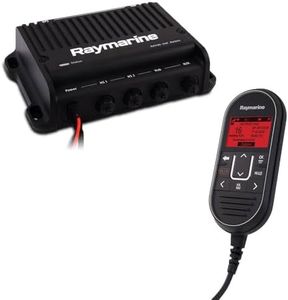
Type (Fixed or Handheld): Fixed
Power Output: 12 Volts (DC)
Frequency Bands: 156.000 – 157.425 MHz
Waterproof Rating: Waterproof

Garmin 0100209600 VHF 115 Marine Radio
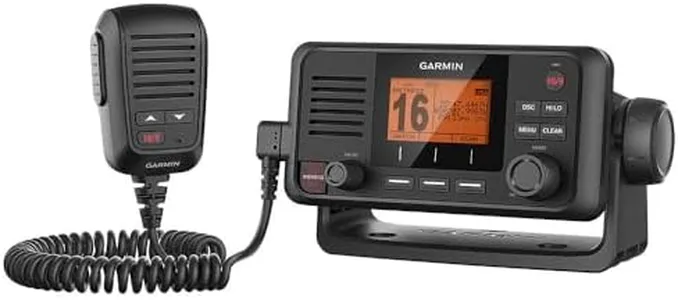
Type (Fixed or Handheld): fixed
Power Output: 12 Volts DC
Frequency Bands: 156.05 to 163.275 MHz
Waterproof Rating: Water Resistant
GPS Integration: no
Display and Interface: medium-sized display

ICOM M424G 21 Fixed Mount VHF Radio with Internal GPS
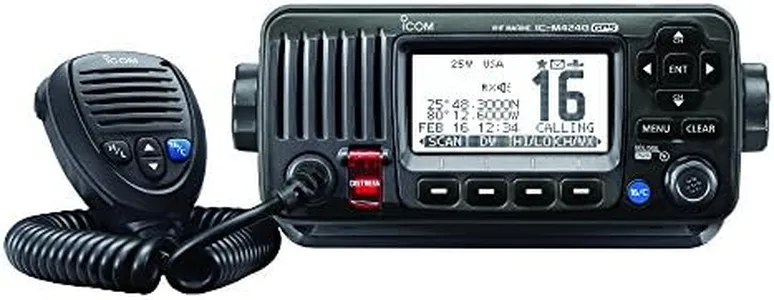
Type (Fixed or Handheld): Fixed
Power Output: 12 Volts
Frequency Bands: 156-174 MHz
Waterproof Rating: IPX7
GPS Integration: Internal GPS
Display and Interface: Simple, no wireless connectivity
How do we rank products for you?

Our technology thoroughly searches through the online shopping world, reviewing hundreds of sites. We then process and analyze this information, updating in real-time to bring you the latest top-rated products. This way, you always get the best and most current options available.

headphones-stars

Buying Guide for the Best Marine Radios

Choosing the right marine radio is crucial for ensuring safety and effective communication while out on the water. Marine radios are essential for staying in touch with other vessels, marinas, and emergency services. When selecting a marine radio, it's important to consider various specifications to ensure it meets your needs and provides reliable performance in marine environments.
Type (Fixed or Handheld)Marine radios come in two main types: fixed and handheld. Fixed radios are mounted on your boat and typically offer more power and range, making them suitable for larger vessels and longer trips. Handheld radios are portable and can be carried around, which is ideal for smaller boats or as a backup. Choose a fixed radio if you need consistent, long-range communication, and a handheld radio if you need flexibility and portability.
Power OutputPower output, measured in watts, determines the range of your marine radio. Higher power output means a greater communication range. Fixed radios usually offer 25 watts, providing a range of up to 20 miles, while handheld radios typically offer 5-6 watts, with a range of up to 5 miles. If you frequently travel far from shore, a higher power output is essential. For nearshore activities, a lower power output may suffice.
Frequency BandsMarine radios operate on VHF (Very High Frequency) bands, which are standard for marine communication. Some radios also offer additional frequency bands like DSC (Digital Selective Calling) for enhanced safety features. VHF is sufficient for most recreational boaters, but if you want advanced safety features, look for radios with DSC capabilities.
Waterproof RatingThe waterproof rating indicates how well the radio can withstand exposure to water. Ratings like IPX7 mean the radio can be submerged in water up to 1 meter for 30 minutes, while IPX8 offers even greater protection. For marine environments, a high waterproof rating is crucial to ensure the radio remains functional even if it gets wet. Choose a radio with at least an IPX7 rating for reliable performance.
Battery LifeBattery life is especially important for handheld marine radios. Longer battery life means you can rely on the radio for extended periods without needing to recharge. Look for radios with battery life that matches your typical usage patterns. For day trips, a radio with 8-10 hours of battery life may be sufficient, while longer trips may require a radio with 20+ hours of battery life or the ability to use replaceable batteries.
GPS IntegrationSome marine radios come with built-in GPS, which can be extremely useful for navigation and emergency situations. GPS integration allows the radio to transmit your exact location during distress calls, improving the chances of a quick rescue. If you often venture into unfamiliar waters or prioritize safety, a radio with GPS integration is a valuable feature.
Display and InterfaceThe display and interface of a marine radio affect how easy it is to use. A clear, backlit display is important for visibility in various lighting conditions, and an intuitive interface makes it easier to operate the radio, especially in emergencies. Consider radios with large, easy-to-read screens and simple controls to ensure you can use the radio effectively when needed.

FAQ